
September 4-week:
truth or fiction?
a personal writing workshop
VIRTUAL: Mondays September 14 - October 5, 5-7pm PT / 8-10pm ET. Recordings are included with registration in advance; they will not be for sale after the fact. Please note that this class involves a lot of breakout-room exercises, so attending live sessions is highly recommended!
What do you need to say that no one else can say?
Whether you want to start a Substack and need to be hyped up or you want to finally finish your novel, this course will give you the tools to:
Feel ownership over your story
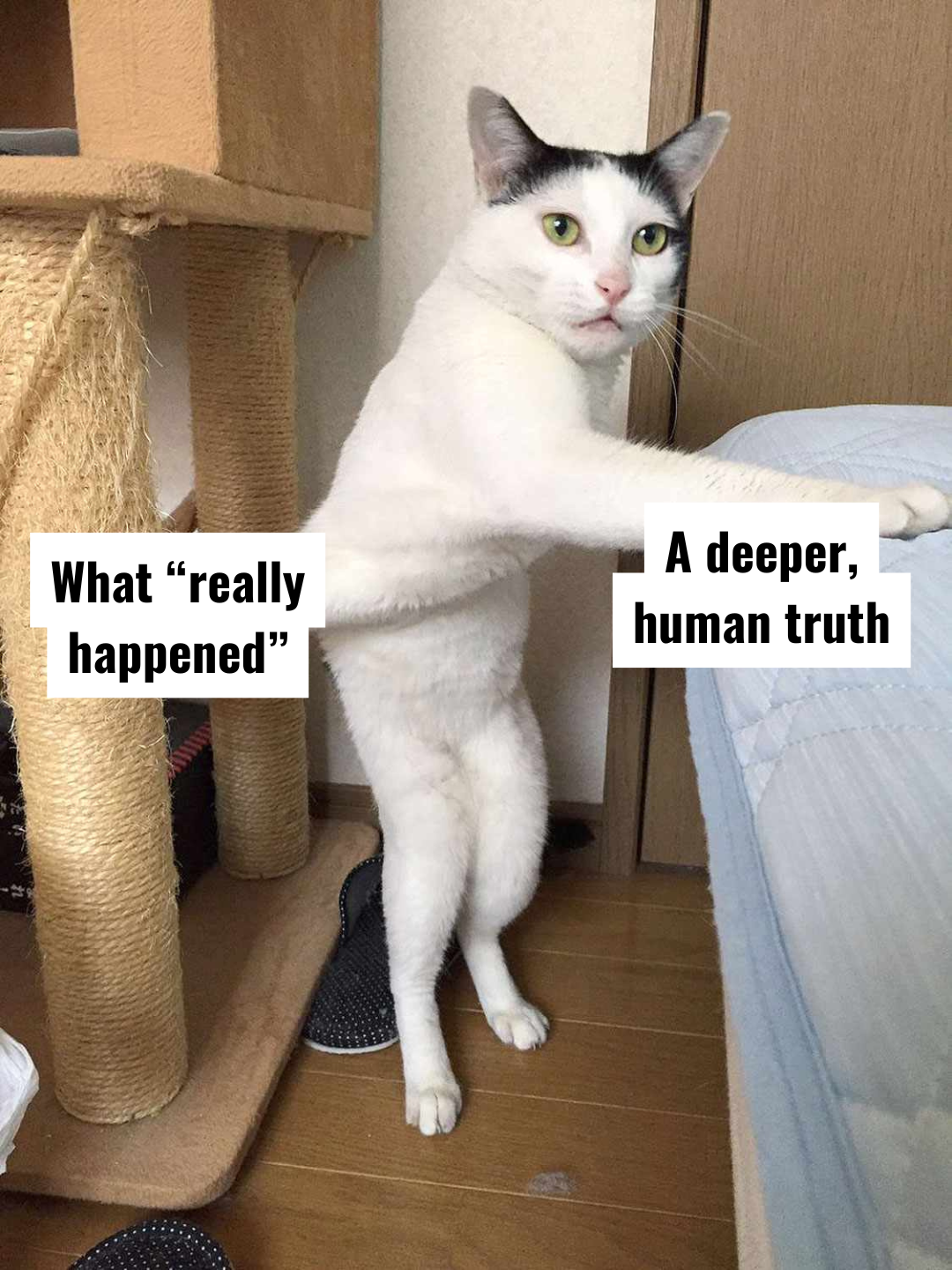
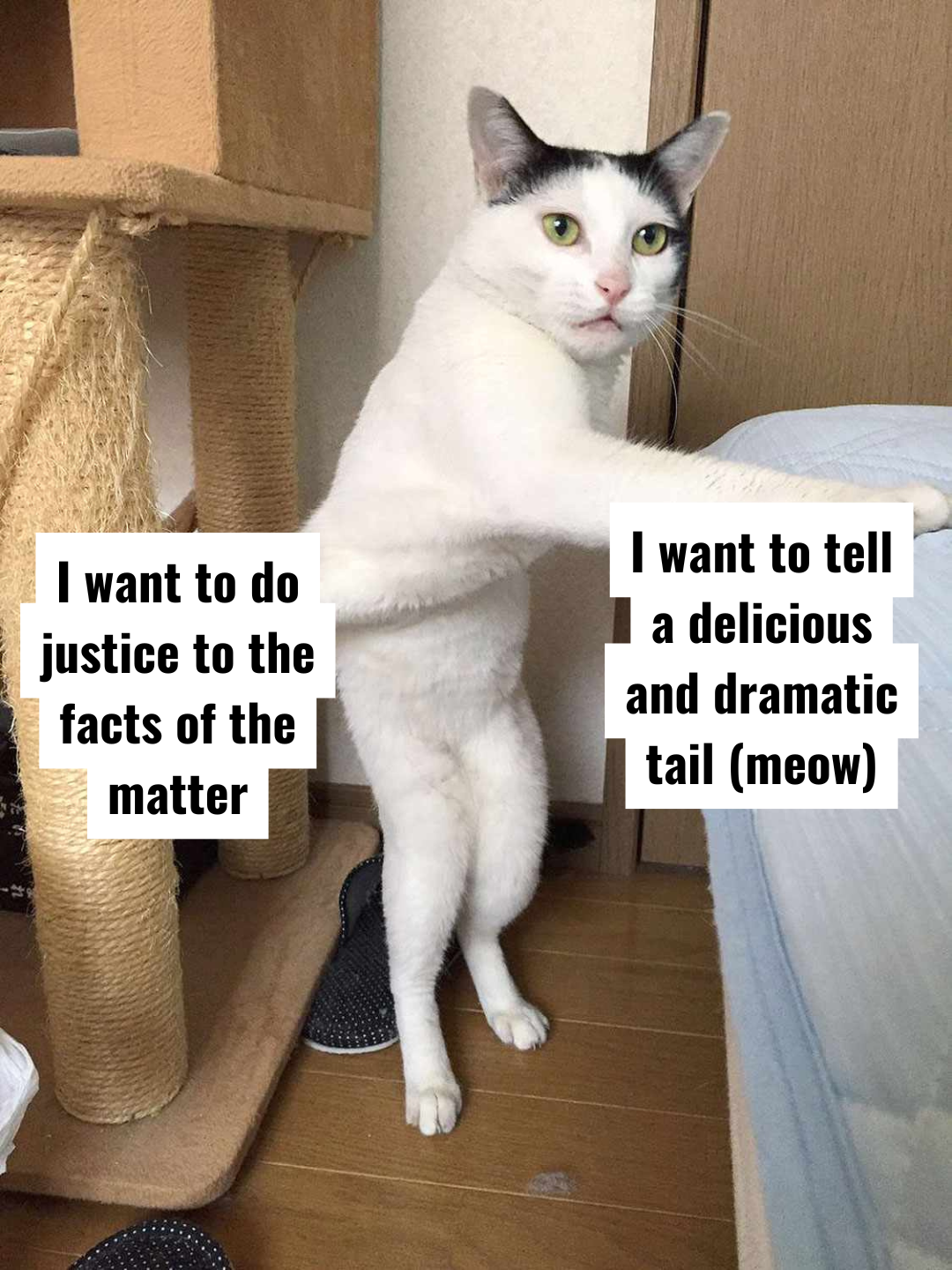
Feel freedom to interpret and rewrite “the facts of what happened” to find a deeper, shared human truth
Reduce imposter syndrome
Use personal story telling to impart a greater lesson
Find what you’re trying to say that only you can say
Find / make meaning
Zoom out and see the events of your life as parts of a larger narrative
See your life as a work of art in and of itself
If you said it, you wrote it.
What will we be doing?
Each class will have an exercise and/or a prompt. You will write for 20 minutes, then share your piece in breakout rooms and discuss:
What did you see/hear/feel?
Share what you notice about what the person notices. Identify any themes that come through in the writing.
Questions for the writer.
Questions for the reader.
Pitches: I’m wondering about…, I’d like more of…, Have you considered…?, or more specific pitches (with permission).
Next, we’ll spend 20 minutes editing. Then: Share again. Discuss again.
There will be optional homework reading and writing assignments.
In the final class, we will read as many pieces as we can with the whole group and share some feedback in the style above. By the end of class, you should have 3 rather polished pieces, and some new friends!
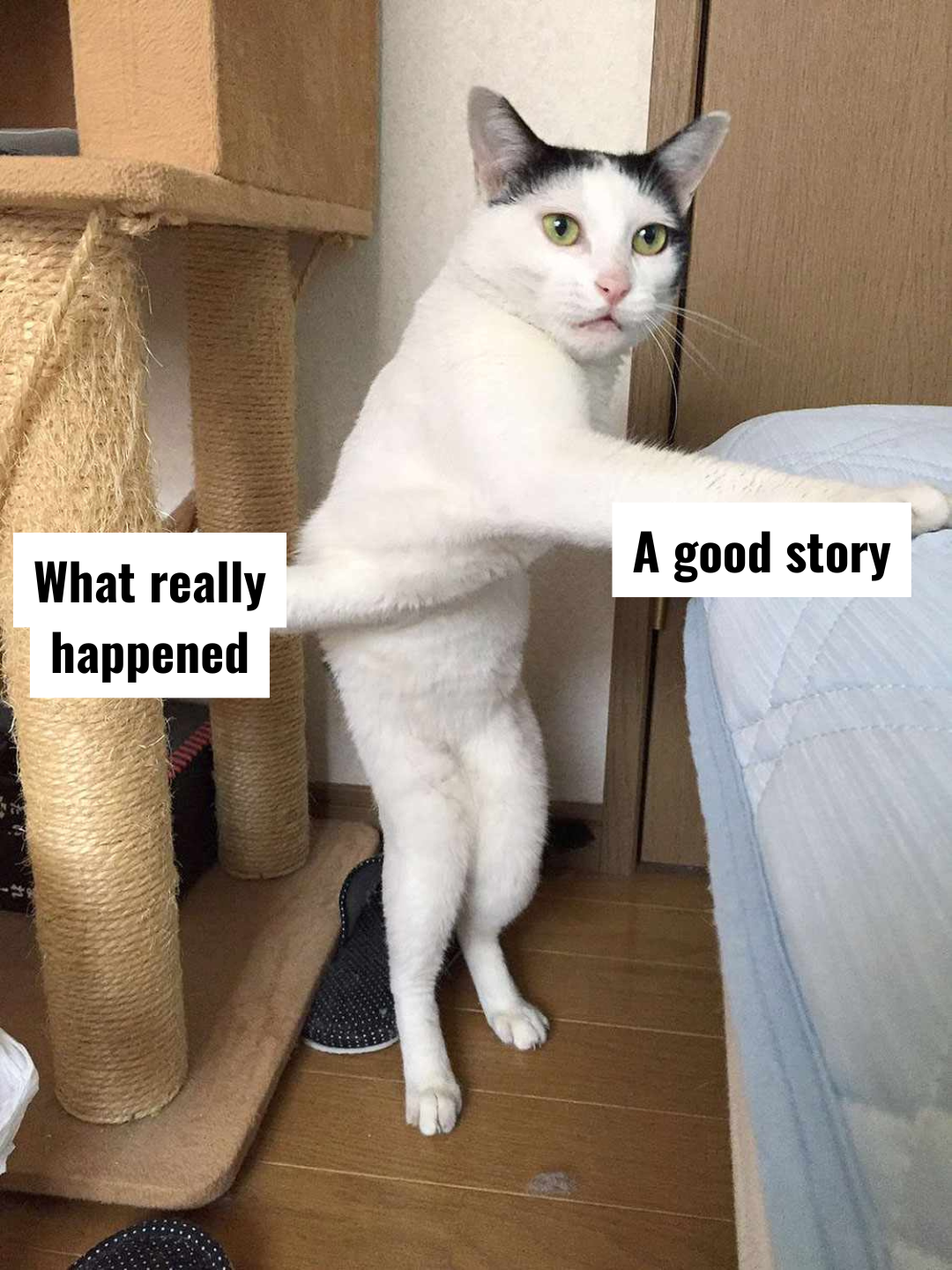
Is it truth or fiction? yep.
Hi, I’m Mia Schachter. I’m an author, multi-media artist, musician, playwright, and intimacy coordinator for TV, film, and theater. It’s my mission to make consent education as digestible and widely available as possible so you can identify your desires, needs, and boundaries and authentically express them to others in your own unique voice.
My background as a writer—plays, music, prose, personal essay, books—is deeply informed by my work as a consent educator. We will use consent-based principles to gently work through creative blocks. We will use tools and exercises from my Unblocked course/method, which tackles perfectionism, people pleasing, inner critic, and imposter syndrome in your art.
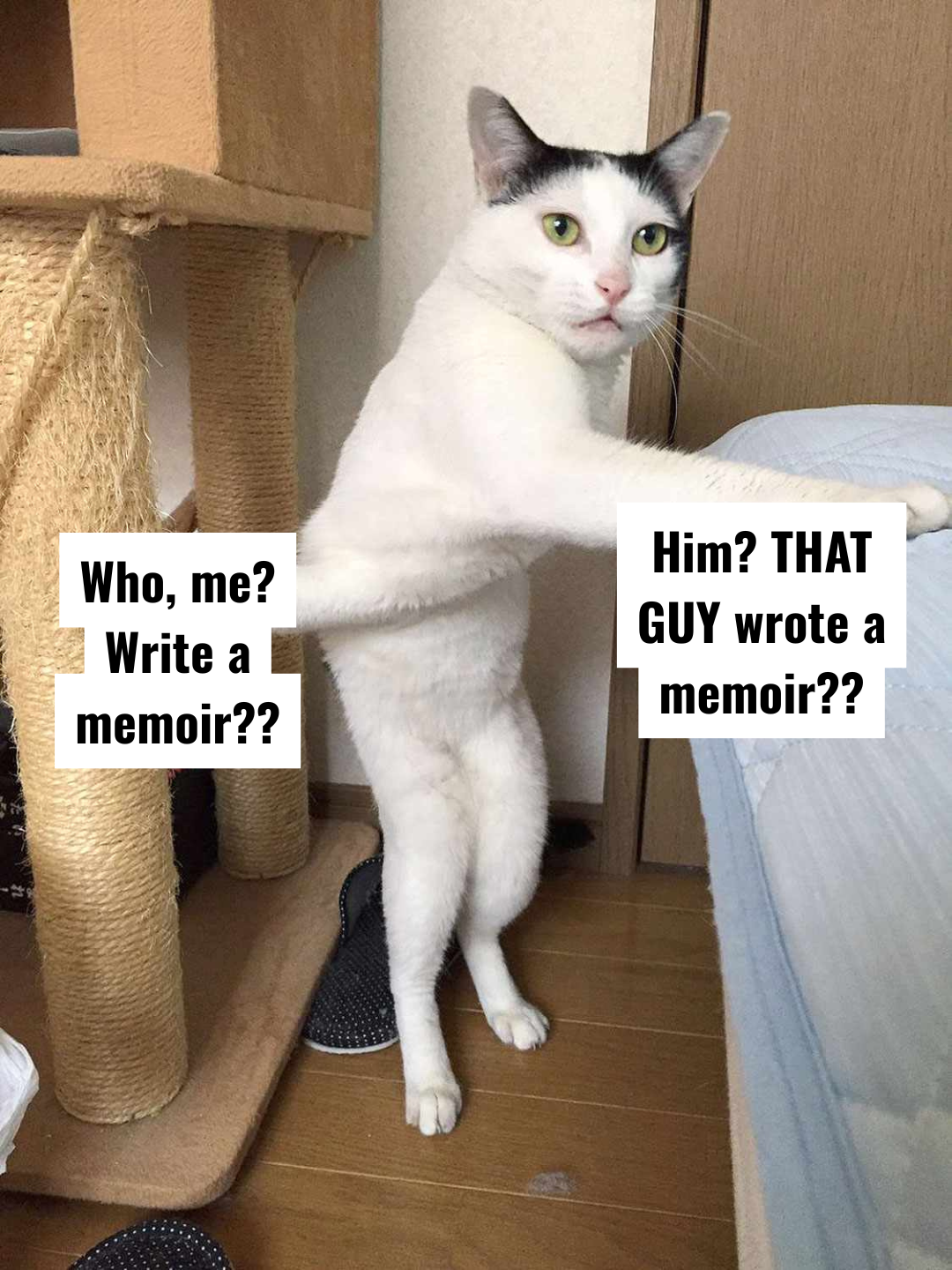
I’ve written several workbooks and I have a book coming out in the Fall from North Atlantic Books called How to Do Consent (Without Sounding Like A Robot) available for pre-order. I have a somewhat successful Substack which is also home to my first book, Unsolicited Advice: A Consent Educator's (Canceled) Memoir. I’ve been published in Salty, XBiz, and the Killing Kittens blog, and I’m a contributor to the Teach Us Consent newsletter. I wrote Tinder’s Healthy Dating Guide in 2024 and served as their Resident Consent Educator.
About me…

For example…
An excerpt from my forthcoming book, How to Do Consent (Without Sounding Like A Robot) with North Atlantic Books, Fall 2026.
Commitment as a Relationship with Past Versions of You
When I was twenty-one, I fell in love with acting. I had wanted to be an actor since I was nine, and I promised myself at sixteen that I was going to follow through on that dream. But it wasn’t until I took my first theater acting class in New York with Sondra Lee that I really understood what acting meant. It’s a process of deep listening (what I call “full-body listening,” meaning more than just words), of being present, tuning in, attuning to self and the other, reacting honestly, not anticipating, and so much more.
The deeper I got into it, the more I began to understand myself to be a process-oriented person, more than a finished-product person. I wasn’t so interested in performing as I was in rehearsing. My love of acting led me to directing, but no one will ask you to direct anything until you’ve directed something, so I began writing my first play with the goal of directing it so I’d have a credit. I let go of the acting dream in favor of directing and ultimately writing.
But I was torn. I felt tethered to my sixteen-year-old self. I wanted to uphold the promise I’d made to them, or that they’d made to me. I felt I was betraying that me. I wanted to go back to talk to them, to tell them that I know things now that I didn’t know then—things that, if they’d known, would help them understand the choice I was making.
My art practice is perpetually folding in on itself, bringing versions of me closer together and further apart, layering like (in my case, gluten- and dairy-free) croissant dough. (Who am I kidding, gluten-free dough doesn’t do that.) When I was twenty-eight, I started a practice of writing letters to my sixteen-year-old self every day, a habit I kept up for quite a few months. Four years later, as I was learning guitar and songwriting, I was struck with an idea for a concept album using those letters to generate lyrics. I remembered that in high school I had frequently made mix CDs for myself and friends. I found them at my parents’ house and used them as source material. Now some of those songs have made their way into the musical I’m writing about the tapeworm I had a few years ago. In a way, this project started eighteen years ago, a true collab between the many versions of me and myself.
I remember a thought experiment from a philosophy class in college: A man told his wife, when they got married, that he would give all the land his father owned to the serfs when his father died. He told her, “If I don’t, then I’m no longer the man you married.” The logic unfolds in a few different ways. If he doesn’t give the serfs the land, is the marriage nullified? If he doesn’t give the serfs the land, is his wife married to a different person, and what are the implications of that? Does she have a right (in that time period) to leave him? Can she remarry him if she wants to? Has he died? Who has replaced him?
I see this experiment playing out in the movie Poor Things. Bella Baxter, played by Emma Stone, dies by suicide while pregnant. Her brain is removed and replaced with the brain of her unborn child, who survived. Her abusive husband—who drove her to suicide—returns and demands that his wife come back to him. She made a commitment. But now, with a new brain, who is she, and who made that commitment? And I think we can ask, even without a new brain, just how much do we change? And further, if we allow ourselves to change, what is left of the whole project of commitment.
I love commitment. I see it as flirting with nihilism and as an endurance sport of sorts. I love the “fuck it” of getting a new tattoo. I love the way getting a new pet holds me responsible for potentially decades. In partnership I find commitment incredibly romantic. I think a fear of commitment is something akin to perfectionism—a constant wondering if you’ve made the “right” choice, as though there’s only one, and a lack of faith in your own ability to change your circumstances and make new choices when you realize you don’t like a choice you made. It’s some kind of #FOMO.
I used to feel this fear deeply. I essentially exposure-therapied myself out of it by making massive commitments, as I mentioned, such as permanent art on my body and caring for numerous living beings (two cats, a husky, and dozens of plants). I want kids; I want a life partner. I want a house to call my own, where I can plant trees in a yard, have an herb garden, lay down roots—both figurative and literal—paint walls, and tile counters with tiles I make myself.
But I’m ambivalent about this paradox: allowing myself and others to change (including acknowledging when perhaps we’ve outgrown each other) while believing in the sanctity of commitment of all kinds and valuing follow-through as a positive trait in a person. Do what you say you’re gonna do. How else do we cultivate trust with ourselves and others?
I don’t have clearcut answers to this. Thinking about times I’ve let myself break promises past selves made to my current or future self, I usually have a sense of having learned something I didn’t know when I made the promise. I’m allowing myself to outgrow perhaps an idealized sense of something I didn’t yet have much experience with firsthand. But when other people are involved, things get more complicated.
I have questions about how much work is too much to uphold a commitment made. I have questions about burning out trying to uphold a commitment, about sacrificing authenticity or a sense of self or time now needed for other things. I have questions about allowing myself and others to change. I have questions about the experience of time as linear when I don’t believe it is, about fate and free will, about freedom and autonomy. But I keep coming back to the very real experience of trust built and trust broken—both with others and ourselves—when it comes to doing what you say you’re gonna do. I said I was gonna write a book. I don’t always want to write it or edit it, but I made an agreement with myself, with my publisher, with my editor, with my agent, and with my audience that I was going to write this book. Sometimes it’s uncomfortable; sometimes it’s agonizing. I’ve made a commitment to all of my paid subscribers on Substack to put out content at such a pace and of such a quality that you all feel like it’s worthwhile to pay me six dollars a month. It’s important to me to be a person of my word. That doesn’t mean I can’t change my mind or change course, but it does mean I have to be in relationship with the me who made the commitment and sometimes gently push my current self to finish what I started. We have to have open, ongoing dialogue about my current capacity and limits, my resources, health, and mental state, and where I’m making my money as it relates to where I’m spending my time.
I see this as a spiritual practice of engaging with past selves, with ancestors, with future selves, and with descendants (biological or otherwise). There is a deep kind of listening, a required presence, and an attuning to our bodies, essential core selves, and the bodies and selves of others to hear the messages about what is true, right, meaningful, authentic. Acting skills come in handy. Sometimes I have to engage with a past self in a kind, compassionate way to break the news to them that I won’t be following through on a promise they made to me, current Mia. Something they want is something I no longer want, or something I’m no longer willing to do. I try to be gentle and let go of my own fears of feeling like a hypocrite.
There can be a lot of grief in this process: The grief of letting go of a past desire or dream. The grief of ending a project before it’s done because you’ve changed your mind. And even the grief of perhaps breaking up with a former self who can’t understand.
Register
VIRTUAL: Mondays September 14 - October 5, 5-7pm PT / 8-10pm ET. Recordings are included with registration in advance; they will not be for sale after the fact. Please note that this class involves a lot of breakout-room exercises, so attending live sessions is highly recommended!
Read about the program here.
When you register, you’ll automatically get an email with everything you need for the first day, including the two recorded classes when you checkout. If you don’t get one, check your spam.
Please note: The deadline for refunds is 24 hours before the first class.
Payment + Pricing
This class is $199. If you are in a country where the exchange rate makes this class financially inaccessible, you are welcome to make me an offer.
Please note: The deadline for refunds is 24 hours before the first class.